
Duke / Hilton lagoon
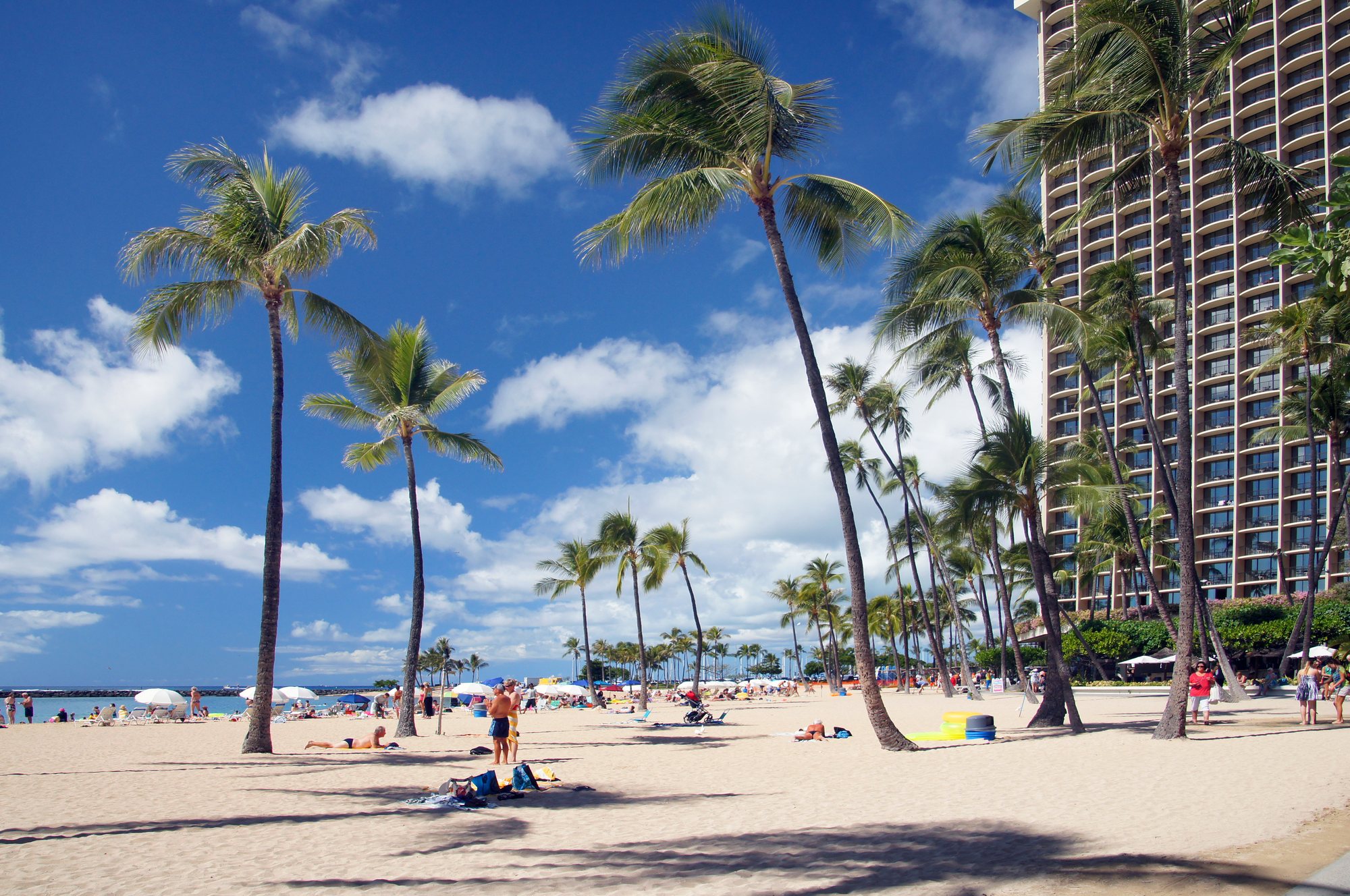
Family wading near the Duke Kahanamoku / Hilton end. Skip after heavy rain — you’re close to the Ala Wai outlet.

Hawaii · Oʻahu
About two miles of distinct stretches — family swim pockets, a surf-lesson circus, quieter sand toward Kapiʻolani Park — with city logistics you can do in flip-flops.
Local rule: swim the marked pockets near the towers — and ask the tower if you’re unsure.
Today’s outlook
Loading today’s outlook…
Waikīkī is ~2 miles of different water. Swim shoreward of the lesson packs; use the protected pockets near towers; ask a lifeguard when conditions look weird.
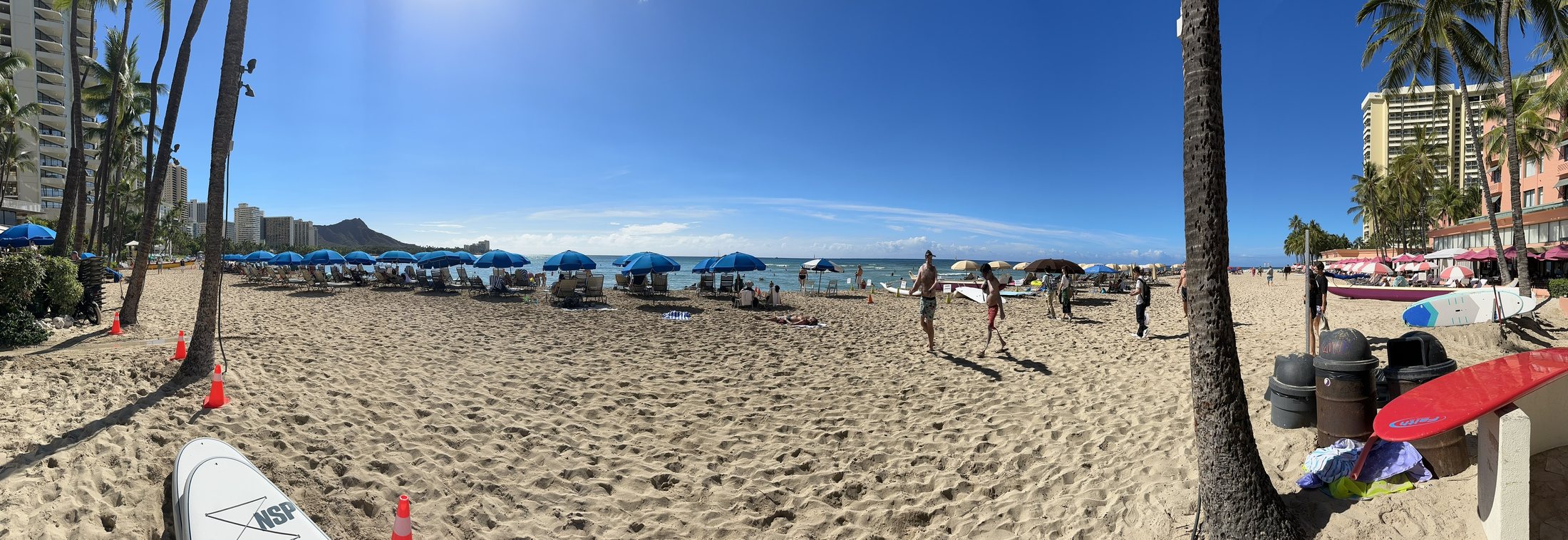
Waikīkī Beaches
Family wading near the Duke Kahanamoku / Hilton end. Skip after heavy rain — you’re close to the Ala Wai outlet.
Wider sand and often gentler water — a solid reset when the central strip feels packed.
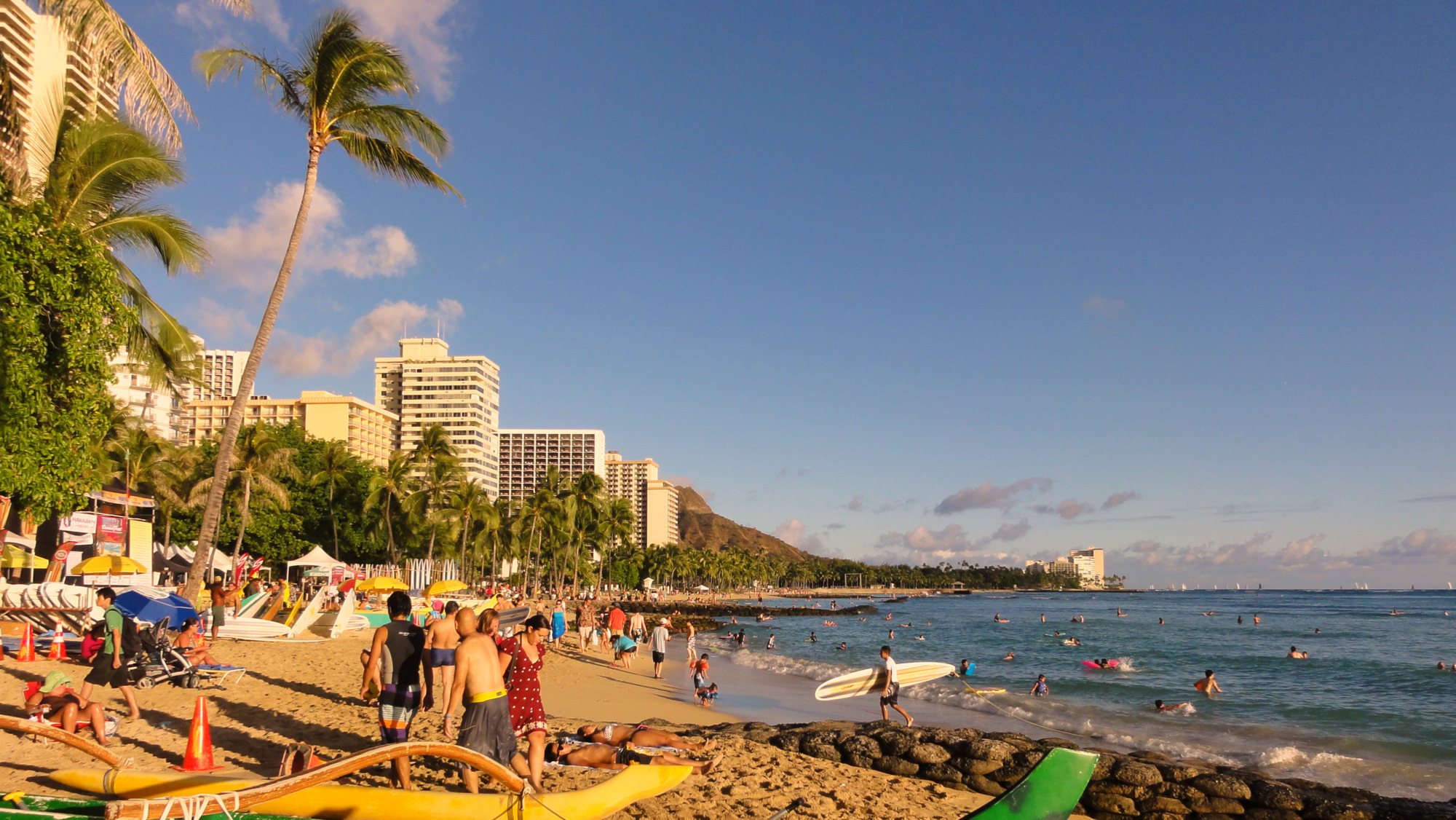
The central hotel strip is packed with surf lessons. Fine for watching; if you’re swimming, stay shoreward of the packs.
Kapahulu Groin (“the Wall”): protected family ponds plus a bodyboard hotspot at the west end of Kūhiō Beach Park on Kalākaua Directions. Watch your footing — slippery in surge.
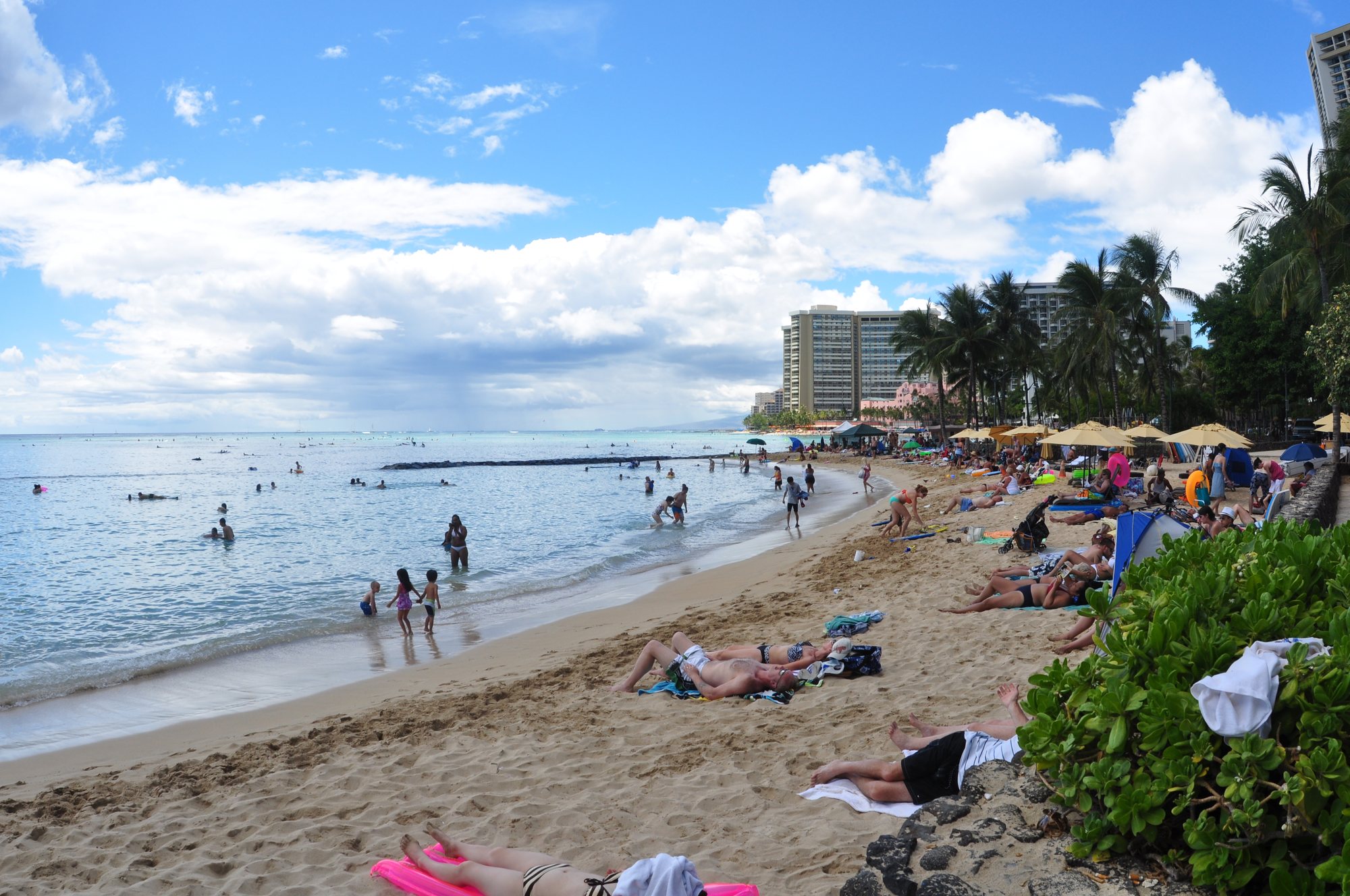
Quieter stretch toward the park side — good when you want less lesson traffic.
Local lap-swim energy. Monk seals sometimes haul out — give them space and stay clear.
Quietest window is before 8–9 a.m. Peak is late morning through midafternoon — more boards, more beach chairs, more everything. If you only get one “magical” beach hour, make it early.
Parking is brutal by midmorning. Plan to walk from your hotel, rideshare, or grab a spot early and treat the day as a stroll corridor.
Waikīkī is energetic and approachable: soft-top lessons at Canoes, quiet laps at Sans Souci, poke and a walk on Kalākaua after. Beach plus city in one walkable strip — that is the point. Treat it as a strip of different beaches — each pocket has its own water.
Summer brings the south swell season; winter usually runs smaller on the south shore. Trade winds often mean morning glass and afternoon chop. Brown-water days show up more with winter / Kona rains — especially near the Ala Wai.
Stay in this neighborhood for easy beach hops. North Shore is a different day trip — not “nearby Waikīkī.”
Bigger park energy west of the strip — a local favorite when Waikīkī feels like a parade.
Protected lagoon swimming next to Ala Moana — check Ocean Safety the same way you would on Waikīkī.
Still in the Waikīkī orbit: lap-swim vibes at Kaimana, wider sand at Fort DeRussy.
A short hop up Kapahulu (and one Kūhiō staple) is where a lot of the day-to-day favorites live.
Poke counter classic — grab and go when you’re sandy and hungry.
Malasadas warm from the fryer — the Kapahulu rite of passage.
Plate-lunch institution — simple, filling, very Honolulu.
Late-night / pupu energy when the beach day turns into a food mission.
Broth break when you want something warm off the strip.
On Kūhiō — fresh-udon line that moves; easy win between hotel and sand.
In brief
Kūhiō Beach
Kalākaua’s busiest corner puts two Waikīkī stories a few steps apart. Duke Kahanamoku’s statue is the postcard: Olympian, surfer, beachboy lineage, not a hotel mascot. People treat the sand under it like a calm pool. It isn’t. That is Canoes and lesson traffic. Nearby, four pōhaku sit behind a fence. They are healer stones. Kahuna here means expert, not magician. “Wizard Stones” was a 1907 English almanac title. A 2023 City plaque finally says the four were māhū, dual in spirit, and known for healing. Do not sit on them, drape a towel, or pose on the enclosure. Pose with Duke if you want. Read the stones.
Myth vs record “Wizard Stones” is a 1907 English title, not the Hawaiian name. The statue is a landmark over a surf and lesson jam, not a swim beach. West end of Kūhiō Beach Park, between the statue and the police substation Directions.
The longer story →Water
The Ala Wai Canal is drainage, not a lagoon. It takes Mānoa and Palolo runoff and empties at the west end of Waikīkī, by Duke Kahanamoku Beach and the Hilton lagoon. After heavy rain, Honolulu and the DOH urge staying out of brown or murky water for at least 72 hours, even if no advisory is posted. The Hilton lagoon can look like a pool and still hold bacteria. Queen’s and Kaimana, farther east, usually clear sooner. Still wait. If the water is brown, you are not swimming. Check hawaiibeachsafety.com and HNL Alert before you get in.
Myth vs record The canal is not a waterfront amenity. “Looks calm” is not clearance. Highest risk is the west end, by the Hilton lagoon and Duke Kahanamoku Beach. East-end pockets recover faster; they are not immune.
.jpg)

